Filippa Hamilton, Ralph Lauren, Copyright, and Censorship

This picture blew-up on the internet over the past few days. Supposedly, it’s an ad by Ralph Lauren. It was picked-up by Photoshop Disasters, and then displayed on BoingBoing. It actually looks like an ad about anorexia, or maybe a parody of the fashion industry and their promotion of unrealistic body images.

After the image was displayed on BoingBoing, Ralph Lauren sent them a DMCA notice telling them to take it down. Photoshop Disasters complied, but BoingBoing balked at the legal notice, said it fell within “fair use” laws (which allow the use of copyrighted material for critique), and created a post to mock them. (I have to say, it’s rather odd when a company tries to stop people from seeing an image they created as an advertisement.) While BoingBoing was heralded as heros for bravely standing up against Ralph Lauren’s attempted to suppress the image, the reality is that their ISP is based in Canada, which means it’s exempt from the DMCA (they have past experience with this). Because Canada doesn’t recognize the DMCA, it means BoingBoing isn’t bravely doing anything except grandstanding to drum up internet traffic.

I also have to admit that I’m not entirely convinced that it’s a real ad, as opposed to a fake created with photoshop by some random person and using a real Ralph Lauren image as a starting-point. It would be an interesting twist in the story if the Filippa Hamilton “ad” was actually the work of some random photoshop artist, and RL wanted it removed because it was unfairly attributed to them. It looks so bad, that it’s hard to believe that Ralph Lauren would use it. Also notable is the fact that Ralph Lauren used other images of the same model that don’t look ridiculous:

But, the story doesn’t end there. BoingBoing also has a long history of censoring people. Sure, they might like to act like crusaders against big-corporate censorship, but if they’re going to get on their soapbox, their flaws should be held up to criticism as well.

Just a year ago, BoingBoing was caught in a scandal where they “unpublished” a bunch of stories and comments by a blogger known as “Violet Blue”. A google search [Google: BoingBoing Violet Blue] shows just how badly the whole thing blew-up in their faces. No one knows quite why Violet Blue was “unpublished” – one idea is that she tried to trademark her name to prevent a porn star from using it; another is that the “unpublishing” was the fallout of a romantic relationship gone bad. And yes, they used the word “unpublished”. Not only does the word sound Orwellian, but unpublishing is exactly what happened in the fictional 1984 world:

A major theme of Nineteen Eighty-Four is censorship, which is displayed especially in the Ministry of Truth, where photographs are doctored and public archives rewritten to rid them of “unpersons”… An excellent example of this is when Winston is charged with the task of eliminating reference to an unperson in a newspaper article. (Wikipedia: 1984)

Perhaps BoingBoing uses the word “unbirthed” when they describe the murder of someone they don’t like. At the same time, I’m sure they hated the fact that George Bush used the euphemism “collateral damage” for civilian deaths, and complained that euphemisms are used to mask reality.

Then, there’s the comments section of their website. Now, it’s reasonable to have moderators for websites, but it’s clear that they use “moderation” as a way to shut down people who disagree with them. So much for free and open debate. You can disagree with them if you want – it will just have to happen elsewhere on the internet, away from the eyes of anyone reading their stories. And with that, their comments section are transformed into a cheerleading sections. I think they know that their views can’t withstand actual scrutiny, so they have to “spank” people with comment deletion, disemvowelling, and banning accounts. Here’s an one example of their censorship: a while back they posted an entry advertising an “I pirate music T-shirt”. They advocate piracy, which is obviously a controversial position, and there’s plenty of good arguments a person could raise criticizing that position. In the comments, the moderator admits to deleting eight of the first nine comments! After that, people start to get irritable about the deletions:

Right… you admit to rapid-fire deleting a ton of comments, and then suggest we have to prove the worth of our comments to you?

[To the Moderator] your post is pretty revisionist. There were a number of posts that disagreed with the shirt’s message — saying nothing of the price — that were deleted as well.

Ok, so what gives now? I had a politely worded argument about why I thought my comments were valid, and it’s been deleted with no response.

After several days, once most everyone had left the thread, they finally allow a comment articulating an argument against piracy. Who knows how many others were deleted in an attempt to prevent their readers from hearing those ideas. And there’s hundreds of people all over the internet complaining about getting censored by BoingBoing. Exhibit A, B, C, D, E, F, G, H, I, J, K, L, M, N, O, P, Q, R, S, T, U, V

Someone even went to the trouble of registering bngbng.net as a comment on their disemvowelling. I can certainly understand the irritation of spending some time writing a long comment (polite ones, even) only to have it silenced by moderators. It’s like having a big piece of duct tape slapped across your mouth. Of course, I realize there’s a difference between forcing someone to take something off their site and removing comments from your own site, but the motive behind it is still disturbing. That motive, of course, is not to save hard-disk space. It’s to reinforce groupthink of ideas they agree with. (What? You disagree with us? Nobody else is on your side; just look at the comments.)

In the end, BoingBoing is grandstanding about corporate censorship, but aren’t willing to allow open discussion on their own site – allowing only neutral or favorable comments so that they produce a facsimile of public consensus. Sounds pretty hypocritical to me. Clearly, we need better free speech advocates.

Update (January 26, 2010):
It looks like BoingBoing has cut-down on their censorship of comments. Recently, Cory posted something about O’Reilly’s eBook sales going up after removing DRM (“BoingBoing: O’Reilly drops ebook DRM, sees 104% increase in sales”). Commenters were quick to point out that Cory’s three data points were spread out at one-year intervals, and eBook sales across the entire industry (DRMed or not) have shown very strong growth over the past year. In fact, O’Reilly’s growth was actually smaller than the industry as a whole. Those stats show industry-wide eBook sales growing from around $12 million in 2008 to around $40 million in 2009, which is approximately 230% growth. It was a pretty ugly smackdown of Cory’s interpretation of the facts, but BoingBoing didn’t appear to delete the comments. Comments like:

The increase in sales is just as easily attributable to an increase in the popularity of e-book readers. It’s nice they dropped the DRM, but there’s not enough there to claim that it had much to do with the increase in sales. If you compare this graph with a graph of e-book sales overall (http://www.idpf.org/doc_library/industrystats.htm), there’s not much difference between them. This post, while encouraging, is a little dishonest.

Was it DRM that caused the increase in sales or, was it the increased consumption of ebook readers especially, mobile phone ebook readers? I did not see the connection between sales increase and DRM. Perhaps, the data are being interpreted though rose coloured spectacles?

I just no longer trust Cory’s claims on these issues any more than I trust Fox News on its take on politics. Not that I like DRM.

EoS Display Issues

It’s always odd for me to see my game on other people’s displays. Not because “it’s my game on their computer”, but I’m talking about the display properties of their screens. It seems like flat-screens are all over the place when it comes to good color fidelity. In general, when I look at the game on other people’s displays, the color palette is over-saturated, overly bright, and bad. It looks like Super Mario Brothers (not that their color palette is bad, just inappropriate for my game). It makes me want to add something to the preferences so that people can tone-down the colors. It’s probably true that most people simply don’t do any adjustment of their display’s color balance, and stores tend to make their displays super-bright just to make them stand out. I suspect that my display is under-saturated, and I shouldn’t be using it when I’m making color choices. On the other hand, I recently hooked up my game to a big-screen TV, and the colors looked okay — much, much better than it looked on a laptop minutes earlier. It’s just one more complication to deal with when making games.

Here’s what I mean by saturation and brightness:

Wikipedia: Hollywood Accounting

Wow. This is sleazy.

Wikipedia: Hollywood Accounting

In accountancy, Hollywood accounting is the practice of distributing the money earned by a large project to corporate entities which, though legally distinct from the one responsible for the project itself, are actually owned by the same people. This substantially reduces the profit of the project proper, sometimes eliminating it altogether. The effect of this practice is to reduce the amount which the corporation must pay in royalties or other profit-sharing agreements.

Due to Hollywood accounting, it has been estimated that only about 5% of movies officially show a net profit, and the “losers” include such blockbuster films as Rain Man, Forrest Gump, Who Framed Roger Rabbit, and Batman, which all took in huge amounts in box office and video sales.

Because of this, net points are sometimes referred to as “monkey points,” a term attributed to Eddie Murphy, who is said to have also stated that only a fool would accept net points in his or her contract.

Examples

Winston Groom’s price for the screenplay rights to his novel Forrest Gump included a share of the profits; however, due to Hollywood accounting, the film’s commercial success was converted into a net loss, and Groom received nothing. That being so, he has refused to sell the screenplay rights to the novel’s sequel, stating that he “cannot in good conscience allow money to be wasted on a failure”.

Stan Lee filed and won a lawsuit after the producers of the movie Spider-Man did not give him a portion of the gross revenue.

The estate of Jim Garrison sued Warner Bros. for their share of the profits from the movie JFK, which was based on Garrison’s book On the Trail of the Assassins.

Art Buchwald received a settlement after his lawsuit Buchwald v. Paramount over Paramount’s use of Hollywood accounting. The court found Paramount’s actions “unconscionable,” noting that it was impossible to believe that a movie (1988’s Eddie Murphy comedy Coming to America) which grossed US$350 million failed to make a profit, especially since the actual production costs were less than a tenth of that. Paramount settled for an undisclosed sum, rather than have its accounting methods closely scrutinized.

Joystiq: What’s In A Name

Joystiq has been running a few articles about how companies got their name. The story behind Stardock:

“I was in college and started the company to help pay for school until I could get a real job. I needed to get a computer and got a hold of a wholesale distributor to get the parts to build it. When I called, they asked me what the name of the company was and in panic, I looked around and was reading a book by Raymond E. Feist and the chapter was called ‘Stardock’ so that’s what I said the company’s name was. It stuck and has been since.”

Wow, he came up with a name on the spur of the moment.

The story Randy Pitchford tells about Gearbox (of Half-Life fame) is a little more harder to believe. It involves a high-stakes late night poker game in New Orleans with Gabe Newell. And, if that tall-tale didn’t trip your BS detector, it appears that Valve and Gearbox are now confirming that the story is a fabrication. I wonder if Pitchford was just seeing how far he could string Joystiq along with that unlikely story.

These stories remind me of a recent episode of This American Life, called “Origin Stories”. In the beginning of the episode, they discuss corporate creation myths. Google even has a myth about starting in a garage:

The Apple and Hewlett-Packard garages have now become such a part of Silicon Valley myth, that it’s made other tech companies want stories like it. Google, for example, they did not start in a garage. The founders began working on their search engine in 1996, when they were at Stanford. They didn’t move into a garage until 1998. They already had investors, and they were just in the garage for five months. But in 2006, Google bought the garage as a company landmark.

It’s like no one wants to hear the story of the rich, well-connected guys who meetup at the Marriott conference room to hatch a business plan. You know, there’s no romance in that.

Dan Heath has written about these origin stories in Fast Company magazine. He says one way to measure just how appealing these stories are, is to count all the ones that get quotes widely, even though they aren’t remotely true.

For instance, when eBay began, a story circulated that it’s founder created the company so that his fiance could buy and collect Pez dispensers more easily. Not true.

One of the creators of YouTube used to claim that the idea for the business came after a dinner party in 2005 when two of the company’s masterminds, Chad Hurley and Steve Chen, shot some video and tried to post it online, and found out just how hard that was back then…. Steve Chen later admitted in Time magazine that the dinner party [story] was embellished to provide a better founding myth.

Of course, there’s plenty of other myths created about historical figures, as well. For example, Christopher Columbus didn’t have some crazy idea that the earth was round back in 1492 – everyone knew that the earth was round. In fact, a Greek mathematician had made a pretty good estimate of the size of the earth back in the third century BC. And George Washington didn’t cut down a cherry tree.

Movie: Moon

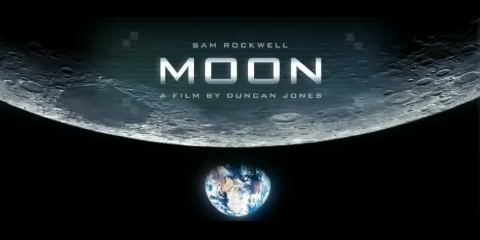
I went and saw “Moon” this weekend. Pretty cool movie. I didn’t know anything about it before I went (we were looking for a movie, and didn’t have an internet connection). It’s probably better to go in knowing very little about it – because you don’t have any real knowledge of what’s going to happen in the movie.

Here’s the quick rundown – only stuff you find out in the beginning of the movie, without spoilers – Sam Bell is working alone on a Moon base for a Lunar Industries. His only friend is an Artificial Intelligence (“Gerty”, voiced by Kevin Spacey). They harvest He3 and send it back to earth for fusion power. He makes sure everything is running smoothly, and attends to the harvesters. He’s nearing the end of his 3-year contract, and he’ll head back to earth. Then things start to get weird; he starts to hallucinate.

Verdict: A very good sci-fi movie. Two Thumbs Up.
(And RottenTomatos, which aggregates movie review ratings, is giving it 91%.)


Infinite Mario

Ha. Someone created a flash game that creates infinite Mario levels. Someone else created an AI that would play the level. I think I’m going to give-up on making games for people. All my games will play themselves from now on. Humans are obsolete.

I think the red streamers in front of Mario are used to calculate possible future movements.