The EFF (Electronic Frontier Foundation) does some decent stuff, and does some work to help protect freedom of speech on the internet. But, once you know that pro-piracy crusaders like Cory Doctorow and Lawrence Lessig are associated with their organization, then it should raise some red flags. Doctorow, for example, has sold “I pirate music” t-shirts on his website, and promoted books teaching people how to pirate and not get caught. Looking at EFF’s stance on issues, it becomes clear that they are (as an organization) taken a pro-piracy stance on things. This is the reason I could never actually support their work. It would be great to see a more moderate version of the EFF, one that doesn’t take a pro-freeloader / anti-creator stance.
Recently, the EFF began promoting “Real Net Neutrality”. Here’s what they say:
“Tell the FCC: Don’t let Hollywood hijack the Internet”
Already with the title, the EFF is drumming up fear-tactics with words like “hijack the Internet”. What does that mean? It sounds scary. I can imagine all kinds of terrible things. What it actually means in this context is “Content creators are unhappy with rampant piracy on the internet. Current legislation would permit ISPs to not-deliver internet packets when they contain copyright-infringing material”. That’s a whole lot less scary, but the EFF clearly wants to use a scary phrase.
Last fall, the Federal Communications Commission proposed rules for “Net Neutrality†— a set of regulations intended to help innovation and free speech continue to thrive on the Internet.
But is the FCC’s version of Net Neutrality the real deal? Or is it a fake?
Buried in the FCC’s rules is a deeply problematic loophole. Open Internet principles, the FCC writes, “do not… apply to activities such as the unlawful distribution of copyrighted works.â€
The net-neutrality bill would allow ISPs to throttle the unlawful distribution of copyrighted works? Gee, it’s a good thing the EFF has stuck out their neck to fight against this. Based on the phrasing, it almost seems as if the EFF thinks that piracy should be permitted as a part of “free speech”. Personally, I actually find it “deeply problematic” that the EFF thinks throttling copyright-infringement is a problem.
For years, the entertainment industry has used that innocent-sounding phrase — “unlawful distribution of copyrighted works” — to pressure Internet service providers around the world to act as copyright cops — to surveil the Internet for supposed copyright violations, and then censor or punish the accused users.
And the EFF uses the scary-sounding phrase “copyright cops” to describe the action of not delivering or slowly-delivering packets when people are involved in copyright violations. Since Net Neutrality is only concerned with the speed of the internet, it seems that slowing down/stopping the delivery of copyrighted material is equivalent to “censoring” and “punishing”. Stopping copyright infringement is not censorship. The fact that the EFF would describe it as censorship tells you a few things about where the EFF stands — and it’s against the creators.
From the beginning, a central goal of the Net Neutrality movement has been to prevent corporations from interfering with the Internet in this way — so why does the FCC’s version of Net Neutrality specifically allow them to do so?
The claim that “from the beginning, a central goal of the Net Neutrality has been to prevent corporations from interfering with [piracy]” is historical revisionism. I support net neutrality, but not when it involves copyright infringement. (To use a page from the EFF’s playbook, perhaps we could say that the EFF is attempting to hijack the Net Neutrality legislation to make the world safer for piracy.)
Besides, if the EFF believes that the goal of Net Neutrality is to let everything flow freely, then they should take a real stand and tell us that child pornography is part of “free speech” and ISPs should never be allowed to interfere with its transmission. At least then, they would be consistent.
“Tell the FCC that if it wants to police the Internet, it first needs to demonstrate that it can protect Internet users and innovators by standing up to powerful industry lobbyists. Sign your name here to demand that the copyright-enforcement loophole be removed.”
This is clearly a false dichotomy. The EFF wants to make the internet safe for piracy, but it does this under the cloak of saying that the FCC isn’t standing up to “powerful industry lobbyists”? Whether you think big-business has too much influence in government doesn’t mean you can just trample over the legitimate rights of copyright holders. That’s the equivalent of saying that Oil Companies have too much influence on the government, and therefore, people should be allowed to steal all the gasoline they want until the government stands up to “big oil”.
The EFF really needs to straighten out their act and stop going out of their way to side with freeloaders.
Addendum, January 16:
Please see my recent post about the EFF’s attitude towards piracy where they say: “there is no evidence out there that “Internet piracy†is leaving us with fewer creators or fewer copyrighted works”. (In other words: piracy is not a problem; there is no need to address the piracy issue.)
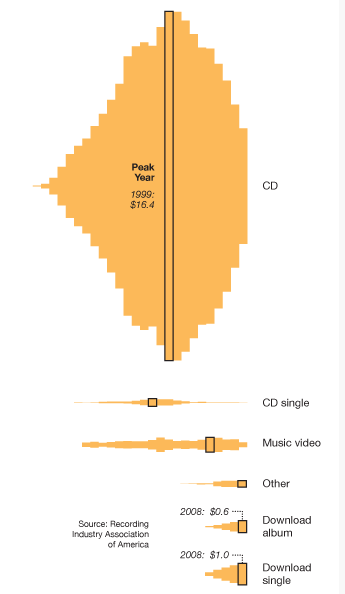
EFF: Piracy Not the Problem – “Piracy is the red herring of the digital music distribution debate” (Ironically, that statement was made at the peak of the Music Industry’s sales – in 1999. The past ten years have seen music sales decline by over 50%.)
EFF releases tool to detect if your ISP is throttling BitTorrent.
EFF defends the makers of Morpheus, Grokster, and KaZaA against a lawsuit brought by the record companies. (Admittedly, I’m doubtful that the creators of P2P software should be held liable, but I wouldn’t want to support them in court, nor could you argue that they were naive about creating anything other than software for the purpose of sharing copyrighted material.)
At Wired magazine: “The EFF vigorously urged the Copyright Office to authorize jailbreaking, which in this case is hacking the phone’s OS, and hence allowing consumers to run any app on the phone they want, including [pirated applications and] those not authorized by Apple.”
Dave Winer, an early supporter of the EFF:
I gave $5000 to the EFF when they started, I think it was in 1990, with the noble goal of protecting freedoms as our technology and culture move online. I think I have supported every cause the EFF has adopted since then, but that’s no longer true. I gave this a lot of thought, believe me, and had a long email exchange with Brad Templeton, the chairman of the EFF board of directors, and think they have become as radically polarized as the entertainment industry, and like Hollywood are now working against the interests of those they were meant to serve. The issue appears to be copyright, and it appears that the EFF believes there should be no copyright….
The problem with the EFF position is that in order to remain consistent, they have had to say that copyright doesn’t exist — if a policy or law restricts what a user can do on the Internet then that is a bad policy or law. The courts can’t agree with the EFF. I don’t agree with the EFF.